

By Mark F. Gray
Staff Writer
mgray@afro.com
In her world of “brave justice,” Prince George’s County State’s Attorney Aisha Braveboy knows firsthand how difficult prosecuting offenders whose crimes could rise to the level of racial hatred can be. Braveboy also knows the challenges of trying to navigate the balance between working with police officers while also being in the position to hold them if they break the law.
Moving into her second year after succeeding County Executive Angela Alsobrooks, Braveboy has prosecuted a hate crime and dealt with several cases involving Prince George’s County Police officers. However, the case of the Minneapolis Police officers who killed George Floyd hits close to home.
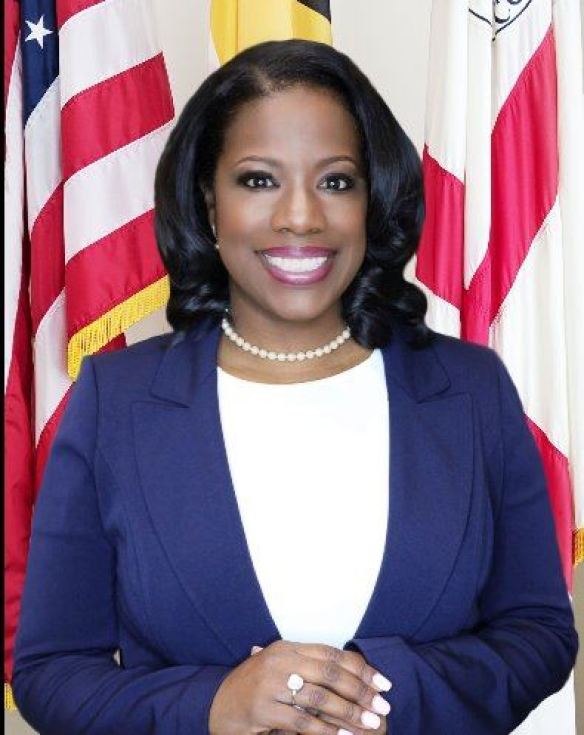
Prince George’s County State’s Attorney Aisha Braveboy is speaking out after the unlawful death of George Floyd as a result of Minneapolis police. (Courtesy Photo)
“Before I became a prosecutor I was a Black woman first,” Braveboy told the AFRO in an exclusive interview. “You can’t witness a man have the life choked out of him with other police officers standing and not be outraged.”
Braveboy is now using her platform as the legal voice for one of the nation’s most affluent African American municipalities to call for swift and fair justice. She called on Minnesota’s Black Attorney General Keith Ellison to evaluate the current climate in the community “and make recommendations on how this case should be handled, and to request an independent medical examination proper decisions are made in the pursuit of justice.”
Prosecutors in this case could face a challenge proving beyond reasonable doubt in that officer Derek Chauvin arrived on the scene in south Minneapolis looking to kill an unarmed suspect who may have been passing a bad check at a grocery store on Memorial Day evening. Most litigators agree there is broad latitude for conviction, but it does leave the door open for the lesser charges to be proven while not holding Chauvin accountable for the most serious offense.
“The video evidence is overwhelming in this case,” Braveboy said. “Mr. Floyd was subdued and handcuffed and didn’t pose a threat when he died.”
Braveboy’s office faced a similar circumstance in November of 2019. She inherited the prosecution of Sean Urbanski who was ultimately convicted of first-degree murder in the May 2017 killing of Richard Collins III, who was set to from graduate from Bowie State University when he was killed at a bus stop on the campus of University of Maryland College Park. The prosecution tried to prove it was a hate crime since Urbanski is White and Collins was Black and there was evidence that racist memes were saved in Urbanski’s phone and that he was a member of the Alt Reich Nation Facebook group.
However, Judge Lawrence Hill dropped the hate crime charge against Urbanski one day before the jury deliberations started because he said the state didn’t meet the burden of proof that the crime was solely motivated by Collins’ race. In March, Braveboy did help lead passage of legislation that strengthens Maryland’s hate crime statute, which clarifies that hate does not have to be the sole motivation for a hate crime. The new law will become effective October 1, despite not being signed by Governor Larry Hogan.
Braveboy acknowledges that the nation has grown frustrated with what many sociologists call the “dehumanization” of Black lives by police officers around the country. This case will be a litmus test to restore faith of the public in the justice system.
“Too many Black men and women have been victimized needlessly and losing their lives at the hands of police officers across the country for no other reason than the failure of rogue law enforcement officers who fail to acknowledge the value of Black lives,” Braveboy said. “Cases like these must be handled with the public trust, and it appears that the trust has eroded as a result of misguided statements made by the local prosecutor.”
