


An Open Letter to President Obama:
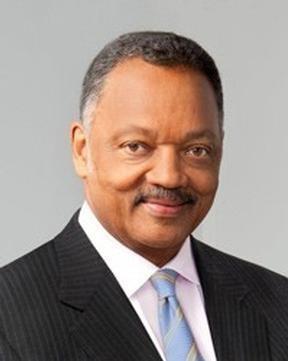
Jesse Jackson, Sr. (Courtesy Photo)
There are high expectations, both in continental Africa and the African Diaspora, that your visits in Kenya and Ethiopia will be historic and transformative. I write on behalf of the civil rights community to urge you to use your speech at the African Union headquarters in Addis Ababa as a platform to address the endemic racism in international institutions such as the G-20 and the World Bank.
Slavery, which robbed Africa of its sons and daughters, was a crime against humanity, as was colonialism, which pillaged Africa and subjugated its people. The abject racism in the 21st century against people of African heritage in global governing bodies and international institutions is a bestial remnant of the world’s original sin.
Africa has heard plenty from world leaders about the lack of democratic institutions and the human rights abuse in the continent. It is about time that the world talks about the absence of democratic principles in the international economic and political governing bodies. It is past time, indeed, that the world deals with the prevalence of rampant international racism.
The systemic confinement of Africans to underclass global citizens is nowhere clearer than in Africa’s gross underrepresentation in the G-20, an institution whose overarching objective is to “promote growth across the developed and developing world to benefit people in all countries.”
Europe and North America account for 14 percent of the world population, but occupy nearly 50 percent of the seats at the G-20 table. Asia has six seats including Australia. Latin America, which accounts for eight percent of the world population, has three. By comparison, Africa, home to 16 percent of the world population, occupies only one seat (South Africa).
The virtual exclusion of Africa from global governance architecture has lent itself to manifest discrimination against people of African origin in international organizations. Since 1979, numerous World Bank reports have acknowledged that Blacks in the World Bank are “rated inferior; ghettoized in the Africa region; and confined to low profile positions.”
A 2014 World Bank report that was prepared by an independent expert was so damaging that the Bank’s first reaction was to embargo it. It was forced to release it “for internal use only” after a concerted campaign for full disclosure by the DC Civil Rights Coalition. According to Justice for Blacks, “the report was sanitized so much so that the independent author’s name was withdrawn.”
On a scale of one to six (one being an outright racist), the report found the Bank “hovering between 2 and 3”. The report classified the Bank with institutions that are “tolerant of racial differences, not open to those who question the status quo.” It documented that “some staff referred to their assignment as kind of apartheid” and underlined that there is a “lack of accountability to discriminated groups”.
The findings of the report is consistent with a 2005 Staff Association report, which documented that the Bank’s Senior Advisor for Racial Equality (SARE) received and reviewed over 450 cases of discrimination in just five years. Yet not a single complainant has prevailed.
The galling statistics do not begin to tell half the story of the endemic racial injustice. Dr. Yonas Biru’s case, which has triggered uproar both inside and outside of the World Bank, provides compelling evidence that racial discrimination in the World Bank is institutionally sanctioned. The case leaves bare the Bank’s longstanding corporate lie that attributes the paucity of blacks in its management ranks to the absence of qualified candidates.
Dr. Biru, an Ethiopian citizen, was a widely praised deputy global manager of an international program. His performance was evaluated consistently as “outstanding and superior.” The problem started when he expressed interest in becoming the global manager of the program. The Bank rejected him alleging that “Europeans are not used to seeing a black man in a position of power.”
The consolation that the Bank offered the Ethiopian was to be a de facto global manager without official recognition and accept the Bank’s decision to front a white consultant as the program’s global manager. The Bank had no qualms about acknowledging on the record that, according to World Bank rules, consultants are “not allowed to work fulltime or manage any World Bank project.” Evidently, the white consultant was fronted as global manager not to offend Europeans by designating a black man as global manager.
Dr. Biru filed a complaint with the Tribunal. As Frank Watkins, my public policy director documented, the World Bank regarded Dr. Biru’s challenge “as audacious and saw it fit to cut him down to size. This involved debasing his official personnel record, wiping out his title from World Bank websites, and claiming that he had no management responsibilities.”
Having freely obliterated his professional standing, the Bank submitted to the Tribunal that he cannot be global manager because he had neither “managerial responsibility” nor “relevant experience.” The Bank further claimed that “he lacks international credibility, and some of the international partners do not want to work with him.”
The Tribunal had before it over a dozen written testimonies from senior officials of international organizations from every region of the world rejecting the Bank’s false claims. Moreover, the Tribunal was in possession of Dr. Biru’s official personnel record that read in relevant parts: “He has multiple roles in the Bank’s global management, managing one of the most critical programs that the World Bank has ever managed… As Deputy Global Manager he continued to make significant contribution… He is praised for his many skills… He managed and brought to fruition important methodological innovations in critical areas that have created a lasting legacy…”
Inexplicably, the Tribunal ruled that the Bank’s actions were explained by business reasons and dismissed all charges against the Bank.
To top off the injustice, the World Bank terminated the Ethiopian. The Tribunal found his termination “unlawful and arbitrary,” but still ruled that he should not be reinstated because “he has criticized his managers.”
The aforementioned 2014 World Bank report found the case as a “blatant and virulent” example of racism. The Bank’s SARE stated for the record that the case is “beyond the pale of comparison and utterly incompatible with the Bank’s zero-tolerance policy against racial discrimination.” Despite such findings, in 2015 the Bank filed a motion to dismiss Dr. Biru’s appeal to reopen the case.
Externally, the US Treasury, the Congressional Black Caucus, the Civil Rights Coalition, the former chair of the US Senate Appropriations Committee, the Government Accountability Project (GAP), and leaders of over 500 faith-based organizations appealed to the Bank to resolve the case justly, but met with no success.
Since 1998, numerous studies including those by the World Bank and the US government have found that victims of racial discrimination are denied the security of justice. This was reaffirmed in the aforementioned 2014 World Bank report. A comprehensive report by GAP has found some evidence of judicial racism against the Tribunal. The DC Civil Rights Coalition has compiled concrete examples, showing the Tribunal has different standards for blacks and non-blacks. The Bank’s SARE is on the record stating that “the internal justice system is immune from scrutiny, especially when it comes to racial discrimination of people of African origin.” Nonetheless, to date the World Bank has refused to address the problem, choosing instead to take cosmetic actions, such as the recent recruitment drive to hire 80 Africans.
As the host country to the World Bank and as its largest shareholder, the US has moral and legal responsibility to ensure that the human dignity and rights of people of African origin are respected. Taking a firm stand against the World Bank will send a clear message to all international organizations that immunity is not impunity.
I urge you to instruct the US Treasury to block US funding to the World Bank until it accords victims of discrimination access to justice. I also ask of you to encourage the Bank to meet the four-point requests that the DC Civil Rights Coalition has submitted:
(i) resolve: Dr. Biru’s outstanding case through external arbitration;
(ii) establish: a high-level external commission to investigate the Tribunal for systemic violation of human rights that the denial of due process constitutes;
(iii) resolve: current and future racial discrimination complaints through external arbitration; and
(iv) address: the underrepresentation of Blacks in mid to senior management positions.
Last but not least, I appeal to you as the President of the United States and as a globally respected statesman to use your influence to ensure that Africa is accorded fair representation in the G-20.