

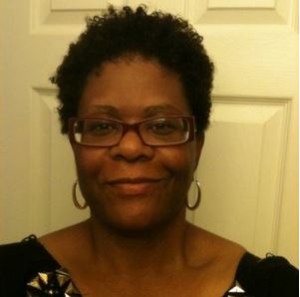
Charly Carter
It’s 2015 and Baltimoreans still don’t have access to high-speed Internet. Mayor Stephanie Rawlings-Blake recently issued the Smarter City Task Force Broadband Report, detailing how the city should move ahead in developing high speed Internet access. She also hired Jason Hardebeck as a part-time contractual broadband coordinator for the city. While these are concrete steps forward, these actions ignore the principal reason that Baltimore City doesn’t have broadband. It is the failure of Verizon to build FiOS in Baltimore City, a city whose ratepayers have contributed so much to sustain the company over the years, but who have now been left on the sidelines.
And it is not only Verizon who is at fault. Our city’s elected leaders, including Mayor Rawlings-Blake, have failed city residents by not pushing for this critical investment in our city. In 2012, the mayor had the opportunity to join with several other cities left behind by Verizon in a campaign to make the Federal Communications Commission (FCC) require FiOS build as a condition to approve a deal between the company and other cable providers. She declined to participate and three years on, Baltimore City is still without broadband for the majority of residents and businesses.
The Smarter City Task Force report seems to have accepted Verizon’s effective abandonment of our community as a done deal. Verizon must be held accountable for drawing a line around our city. The report should be straightforward in highlighting the fact that Verizon has built FiOS in all surrounding suburban communities but not in Baltimore. The city’s elected officials, civic leaders, businesses and community leaders must create an economic and political environment to press Verizon to invest in our city with fiber deployment.
To grow our city’s economy and create jobs, we need gigabit all-fiber networks with enough capacity to provide lightning-fast connections for video-rich and data-intensive applications. We must provide our schools, hospitals, first responders, large and small businesses, public agencies and residents with the high-speed Internet that they need to function and succeed.
Unfortunately, Baltimore City is a fiber desert. And more than 20 percent of Baltimore households have no Internet connection – at any speed — at home. A city-funded consultant’s report that accompanied the Smarter City report identifies a few patches of fiber downtown, on the city’s borders and at major hospitals, Johns Hopkins University and business parks.
This is a dire threat to the future of our city. Our students need access to broadband in school, libraries and at home to compete and succeed in 21st century schools. Lack of access to FiOS is a disincentive for businesses, particularly in the information sector with good paying jobs, to locate in Baltimore City, growing our local economy.
The Task Force report includes a number of recommendations to encourage private investment in fiber networks. But few of the recommendations seek to remedy the lack of broadband available to the vast majority of residents in Baltimore City, especially in communities of color and working class communities where access to opportunity is increasingly tied to high-speed Internet. Wiring new, upscale developments hardly moves the needle toward the real goal of providing equal access to all neighborhoods.
Public-private partnerships, like those in Kansas City, Austin, and Raleigh-Durham, can facilitate private investment in all-fiber networks by expediting permitting and opening city conduits, poles and rights-of-way to privately-owned cable. These are all creative approaches to solving the problem, but the fastest way to get Baltimore connected is to demand that Verizon be part of building the needed infrastructure.
Quite simply, Baltimore cannot be a world-class city with third-world broadband infrastructure. Surrounding suburban communities benefit from competitive broadband providers driving investment, innovation and service. Our elected leaders should ensure the same for Baltimore City. We deserve nothing less.
Charly Carter is the executive director of Maryland Working Families; she can be reached at ccarter@ workingfamilies.org.
