

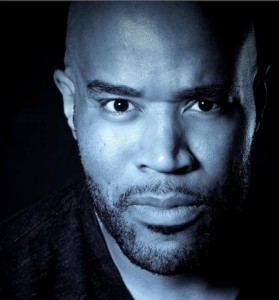
Sean Yoes
Even as Baltimore continued to digest the news that Mayor Stephanie Rawlings-Blake will not seek re-election in 2016, the city was hit with another political bombshell on Sept. 14 when Empowerment Temple Pastor Jamal Bryant announced his bid to replace U.S. Rep. Elijah Cummings, who represents the venerable Seventh Congressional District of Maryland.
“I’m not opposing anyone, I’m proposing new ideas,” Bryant said during his announcement in the Bolton Hill community, outside of the recently dedicated Freddie Gray Youth Empowerment Center on Eutaw Place.
The 44-year old pastor and community activist attempted to strike a delicate balance making his case to represent the people of the seventh district, while not disrespecting the work of the man who has held the seat since 1996. Bryant also seemed to acknowledge he’s running for the seventh on the assumption Cummings will seek the U.S. Senate seat currently held by retiring Senator Barbara Mikulski.
“I have not talked to Mr. Cummings, I think he’s done a wonderful job, he’s been an incredible leader for our community…if he decided to stay in (House of Representatives) I would have a conversation with him because I respect him that much,” Bryant said.
On the same day as Bryant’s announcement, Cummings made an announcement of his own, `Not so fast.’
“Anybody…who thinks or presumes that I will not run for this sacred office, that is the Seventh Congressional District of Maryland, where I live in a district that I love, their assumptions are definitely premature,” Cummings said.
Many cherish the historic legacy of, `the sacred office that is the Seventh Congressional District of Maryland.’
In 1970, Parren J. Mitchell became the first Black elected to Congress from a state below the Mason-Dixon line since 1898 and the first ever in Maryland, after he defeated the incumbent Samuel Friedel by just 38 votes. After the 1970 Census, the Seventh Congressional District of Maryland was redrawn to be a majority Black district in West Baltimore (the district now stretches from Baltimore City to parts of Howard and Baltimore County), the first in the history of the state. It was a major step in the consolidation of viable Black political power in Maryland and the Seventh served as a base for several subsequent successful political campaigns for Black politicians. The redrawing of the Seventh (and the burgeoning Black voting bloc) also helped bolster Baltimore’s role as the dominant Democratic stronghold in the state for decades.
Mitchell, one of the early and most vocal members of the Congressional Black Caucus (the group was formed in 1969 just prior to Mitchell’s arrival), was the, “father” of Minority Business Enterprise (MBE). In 1976, Mitchell attached an amendment to a $4 billion public works program, which required state and local governments applying for federal contracts to set aside 10 percent of the money for companies owned by people of color.
Trailblazing was nothing new for Mitchell, who came from one of the storied families of Black Baltimore. His brother, Clarence Mitchell, Jr., (whose mother-in-law Lillie Mae Carroll Jackson was known as the mother of civil rights in Maryland, his wife Juanita Jackson was a civil rights firebrand and the first Black woman to practice law in Maryland), known as the, “101st Senator,” was the most effective lobbyist in the history of the NAACP. Mitchell, Jr., who was a star reporter for the Baltimore AFRO American Newspaper, was also part of the team (through a plan created by the AFRO and the Baltimore branch of the NAACP) that first attempted to integrate the University of Maryland in 1933.
In 1950, Parren Mitchell integrated the University of Maryland’s College Park campus, the university’s last bastion of segregation.
After Mitchell announced he would not seek re-election in 1985, Kweisi Mfume ran for and won the Seventh District seat and took up the mantle of leadership and service so carefully crafted by Mitchell.
During his fourth term in Congress, Mfume became chairman of the Congressional Black Caucus, the organization Mitchell had been so influential in helping establish. Mfume, later moved on to become president of the NAACP.
In an ironic twist of fate, Mfume told me that during the Baltimore Riots of 1968 it was Parren Mitchell who confronted him (then Frizzell Gray) on the street, in the midst of destruction and violence and dissuaded him from engaging in activity that could have proven catastrophic to him or others. It was around the same time the trajectory of his life — he had been a multiple teen father, high school dropout and generally a hooligan — was changed radically. By the early 1970’s he adopted a new name and in 1978 he ran for a seat in the Baltimore City Council, winning by a mere three votes.
This is part of the incredible legacy Cummings inherited (after a brutal political battle) in 1996. It’s going to be interesting to see if he’s ready to give it up with or without a fight.
