


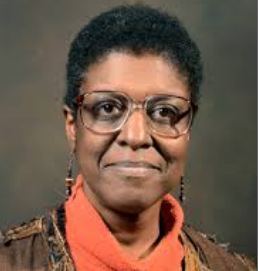
E. R. Shipp (Courtesy Photo)
Legalization of same-sex marriages by the United States Supreme Court has rattled a whole lot of people, especially Black folks whose faith has been rooted in an Old Testament worldview of homosexuality as a sin committed with alacrity by flawed humans. Everything is moving too fast, they say. The end of the world must be nigh.
It confounds me that a ruling that recognizes love, human dignity and equality has sparked such vitriol from those who profess to be men and women of faith.
I appreciate that they are discombobulated, but when the Supreme Court ruled that the Constitution protects the institution of marriage for same-sex couples, the song that came to my mind was a joyous church staple: “This is the day that the Lord has made.” Lyrics of another closely followed: “It’s been a long time coming.”
How I wish that my uncle Richard, my brother John and my good friends Victor and Steve were here to experience the seismic shift in attitudes and in the laws of a land that was not always kind to them. Richard, a Navy veteran of the Vietnam era, chose exile in San Francisco, far away from his Georgia relatives, so he could live as a gay man. Victor, a brilliant lawyer and linguist, author and patron of the arts, lived in Europe for years so he could be himself. John was a minister and a poet whose sexual experiences were always of a furtive nature. Steve was a dandy, church chorister and a top salesman in a Fifth Avenue jewelry store in New York, but his life, too, was full of secrets and lies. Each died more ashamed than affirmed.
Churches and church-loving people knew all of them. They were the kind of people that to this day far too many churches exploit for their talents, but, from the pulpit, condemn to the fiery pits of hell. Some of these self-described Christians see the Supreme Court’s decision as evidence of moral decay and President Obama, an unflinching supporter of LGBT rights, as Sinner-in-Chief. “The president is leading this nation on a sinful course, and God will judge him and us as a nation if we don’t repent,” the evangelist Franklin Graham thundered, using words heard with only slight variations throughout the country among White and Black defenders of their brand of religion.
Grappling with a ruling he could not understand, my cab driver wondered if the whole country would be gay in 30 years – as if this were a contagious disease. A young woman said that if her friends want to be gay, that’s fine with her – as if one’s sexual identity is solely a matter of choice like the latest runway fashions.
When the reaction has not been that of fear, loathing or ignorance, it has oddly been one of race-based envy. I have heard Black pundits say that this marriage equality fight is mostly a White gay thing that proves once again that Whites with money and influence can have their way. While conveniently overlooking that Black people also benefit from the Supreme Court’s decision, they begrudge the LBGT community’s success in such a relatively short time compared to a seemingly never-ending quest to make real what is now largely a slogan: Black Lives Matter.
They miss the point. What the court’s majority – Justices Kennedy, Ginsberg, Sotomayor, Kagan and Breyer – said in some 28 pages was: All Lives Matter.
“It would misunderstand these men and women to say they disrespect the idea of marriage,” Justice Kennedy wrote for the majority. “Their plea is that they do respect it, respect it so deeply that they seek to find its fulfillment for themselves. Their hope is not to be condemned to live in loneliness, excluded from one of civilization’s oldest institutions. They ask for equal dignity in the eyes of the law. The Constitution grants them that right.”
A few years ago when Black clergy were making noise about withholding votes for Obama in 2012, the Rev. Otis Moss III explained to his congregation at the Trinity United Church of Christ in Chicago why those preachers were misguided, confusing constitutional rights with religious rites and blaming the LGBT community for all that is wrong with the world. “Gay people have never been the enemy,” he said, “and when we use rhetoric to suggest they are the source of our problems we lie on God and cause tears to flow from the eyes of Christ.”
Some day our descendants will marvel that this country once condemned interracial marriage until the Supreme Court ruled miscegenation laws unconstitutional in 1967 and once condemned same-sex marriage until the Supreme Court spoke again on June 26, 2015. Loving is loving, the High Court said then and now.
E.R. Shipp is associate professor and journalist in residence of Morgan State University’s School of Global Journalism and Communication.