

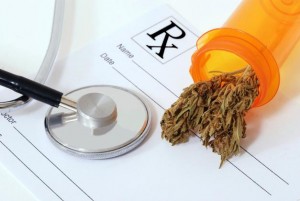
Even as scores of D.C. residents recently celebrated the city’s liberalization of marijuana laws by publicly exchanging cannabis seeds, one group remained on the outside looking in – local and national veterans who are seeking a way to be treated with medical marijuana through the Veterans Administration.
But they are hoping a piece of legislation now winding its way through Congress could provide them medical relief by allowing their VA physicians to prescribe them medical marijuana to treat a variety of maladies – from PTSD to the side effects of cancer therapy.
The legislation, the Compassionate Access, Research Expansion and Respect States, backed by Republican and Democratic in the Senate, would allow states to create their own medical marijuana policies without federal interference, permit banks and other financial institutions to provide checking accounts and services to marijuana dispensaries, and open the door for research on medical marijuana. It would also allow states to import Cannabidiol, which is recognized treatment for epilepsy and seizure disorders.
Marijuana is currently a schedule I drug, which restricts it from being prescribed for treatment by federal medical facilities. Lt. Col. Benjamin Potter, vice chair of research and associate professor of surgery for Orthopedic Oncology at Walter Reed National Military Medical Center, said allowing marijuana to be used for treatment is certainly worthy of consideration, “As an orthopedic tumor surgeon, I deal with cancer patients on a daily basis,” Potter said. “If prescribing medical marijuana became an option as a result of this act, I would carefully consider prescribing to patients I feel it would benefit.”
Republicans and Democrats, including Sens. Rand Paul (R-Ky), Corey Booker (D-N.J.) and Kirsten Gillibrand (D-N.Y.), have supported the bill. “For far too long, the government has enforced unnecessary laws that have restricted the ability of the medical community to determine the medicinal value of marijuana and have prohibited Americans from receiving essential care that would alleviate their chronic pain and suffering,” Paul said in a March press release.
Booker expressed similar support. “We need policies that empower states to legalize medical marijuana if they so choose, recognizing that there are Americans who can realize real medical benefits if this treatment option is brought out of the shadows,” he said in a statement. “Doctors and patients deserve federal laws that are fair and compassionate, and states should be able to set their own medical marijuana policies without federal interference.”
Some physicians believe that the proper dose of medical marijuana can ease the symptoms of PTSD, and many veterans returning from the wars in Iraq and Afghanistan share their beliefs, , but there is no government-based research to support the claim. Medical marijuana has been known to help with nausea and pain in cancer patients going through chemotherapy and to help with glaucoma.
Despite the lack of government research in some areas, a number of injured veterans are excited about the prospect of medical marijuana being accessible to them. “When I returned from overseas last year, my head was messed up,” Staff Sgt. Henry Miller said. “I was diagnosed with PTSD and prescribed several medications and received help from a lot of people, but nothing has really helped with the anxiety. I have heard from several friends that medical marijuana can help with it, but as an active duty member of the Army, it is strictly prohibited.”
Potter said he also thinks use of medical marijuana might be beneficial, despite some pitfalls. “With any medication, there is a risk of abuse and complications with mixing meds,” he said. “I think this would be good for patients if the guidelines are clear to avoid any misuse of the drug.”
Michael Collins, policy manager at the Drug Policy Alliance, worked with the senators in crafting the bill. He believes the bill has a “very likely chance” of passing. “The press is catching wind of this,” he said. “The senators and the families of those suffering without the ability to obtain their medicine are very energized to get this done.”
