

African-American law enforcement leaders in the Washington, D.C. area have diverse views on the volatile situation in Ferguson, Mo., where the police department is being criticized for its response to the shooting death of Black teen Michael Brown.
The killing of Brown on Aug. 9 has put Black police officers around the country in a quagmire. They must decide whether to support their fellow officer, Darren Wilson, who is White, who shot Brown or stand with Black leaders who want Wilson severely punished.
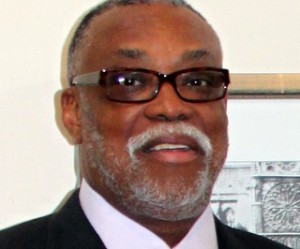
Ronald Hampton is the former executive director of the National Black Police Association.
Ronald Hampton, the former executive director of the National Black Police Association and a retired District officer, was blunt about Wilson’s actions.
“That police officer committed cold-blooded murder,” Hampton said. “That is not the proper way for an officer to deal with that type of situation. You cannot shoot a person just because they are turning and walking away.”
What is widely known is that Wilson harshly asked Brown to stop walking in the street and a verbal and eventual physical conflict occurred. When Brown sought to leave the scene, Wilson shot at him and when Brown surrendered by putting his hands up, Wilson shot him multiple times.
“There is no justification in using that type of force,” Hampton said.
However, Anthony Ayers Sr., the police chief of Capitol Heights, Md., said that it’s too soon to make a judgment in the Brown case.
“I would say that the Ferguson Police Department could have handled the media better and had a public information officer to explain to the media how a police officer is trained to act in a particular situation,” Ayers said. “What I don’t like is when you have Sharpton and other leaders making comments when they don’t have all of the facts.”
Delroy Burton, who is the chairman of the D.C. police union, agrees with Ayers.
“We need to step back and wait until the Department of Justice finishes its report,” Burton said. “Right now, policing is being vilified. Nobody talks about people shooting at police officers and White police officers do not shoot Black people randomly.”
Hampton said that he fought for years to increase the number of Black officers and supervisors in the District’s police force. He did chafe at the lack of diversity in law enforcement in St. Louis County.
“The St. Louis County municipalities resemble Black police representation levels that were in the late 1960s and early 1970s in D.C.,” he said.
Burton said that he is disturbed by the racial element that has surfaced.
“The circumstances around the shooting of Michael Brown are not a Black and White issue,” he said. “I know the country has racial issues and racism is more overt now. We need to keep in mind that police officers are not trained to kill but they are trained to control a situation.”
Burton noted that Brown had a large frame and he said that Wilson had been taught to shoot the biggest part of his body to subdue suspects.
“The officer is taught to shoot until the threat is over,” Burton said.
Ayers said that Wilson should be given a benefit of a doubt until all the facts come out.
“We as African Americans need to be conscious about being guilty before we are tried in a court of law,” he said. “That is what happened to us in the 1950s and 60s. I do sympathize with the young man’s parents but we have to find out everything that went on.”
Hampton said that he as an officer would have approached Brown differently.
“I would have asked Michael Brown to get out of the street and I would have said please,” he said. “As a police officer, you are taught to de-escalate a situation and Wilson did not do that. Wilson was wrong from the beginning.”
Hampton also understands officers standing up for each other in times of crisis.
“There is a Blue Code of Silence among officers,” he said. “Right or wrong, they take up for each other. Police officers rarely get punished for what they do.”
However, he said that the code doesn’t apply to all officers.
“Blacks tend not to be involved in the Blue Code,” Hampton said. “When I was on the D.C. police force, I spoke out against the Blue Code. I told my fellow officers and superiors that ‘I’m not blue, I’m Black.”
