

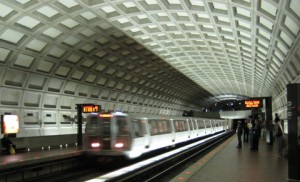
The D.C.-area metro is experiencing a lower number of Black riders because of safety concerns. (Photo credit WMATA)
Recent data from the American Public Transportation Association (APTA) shows that many U.S. cities have experienced record-high public transportation ridership. However, the Washington Metro Area Transit Authority’s Metrobus and Metrorail services have seen a combined ridership decline between 2013 and 2014. Increased disruptions in service, caused by a failing infrastructure, coupled with a record number of fires and constant repair and maintenance work has many Black riders opting for alternative modes of transportation.
In an interview with WTOP radio earlier this year APTA President Michael Melaniphy said the initial decline of 0.84 percent on Metrorail and 0.31 on Metrobus was not a cause for alarm. “We want a long-term sustainable, multimodal surface transportation bill so we can bring certainty to this country, fix our state of good repair issues, and deal with the increase in ridership that’s happening across the country. We need it for global competitiveness for this country,” he told the station.
Since the initial report, Metrorail has been plagued by constant mechanical failures, including a fire near the Stadium-Armory Metro station that blew out a 9-megawatt power substation and shut down the station’s service indefinitely. It was following this incident on Sept. 21 that Hakim Butler and his wife decided to commission a regular Uber driver to get them to work and their two children to school. “As a kid I used to ride the trains from my house on Nannie Helen Burroughs Avenue, Northeast all the way to Francis Jr. High near Georgetown and it was always a safe journey,” said Butler, who owns a local janitorial service. “Metro is just too volatile right now – it smells like smoke, there is always a delay, and we cannot afford to have something happen to our children on a whim.”
For now, the Butlers use a single Uber driver with a minivan to drop his children off at school, and then he and his wife several blocks away. The same driver drops the teens off at home, while the parents carpool with neighbors after work.
Safety concerns also forced Lamia Stanton from Metrorail to buy a bicycle several months ago when a fight between teenagers on a Blue Line train became so volatile she said she feared for her life. “It’s not enough that the trains are overcrowded and late a lot of times, but if you happen to get on when these teenagers are heading to or from school, it is utter chaos,” said Stanton, who lives near Eastern Market. “Sometimes they are just roughhousing, but that day it was like a brawl and there was nowhere to move. I vowed if I got off that train in one piece, I’d never get on again – and I haven’t.”
Stanton said she purchased a secondhand bicycle from a local shop and has been making the trip to her downtown D.C. offices in record time and without much grief.
When asked if repairs to the system would bring them back as loyal riders, both Stanton and the Butlers seemed reticent. “I want to support Metrorail because I’ve been on it since 1976, but when I think of people losing their lives or my kids being in a panic with smoke surrounding them, I just can’t risk it. Unless a complete overhaul is done of the system, riding it is not worth the risk to my family,” Butler said.
