

Virginia Gov. Terry McAuliffe (D) signed legislation April 22, reversing more than 150 years of state law that stripped convicted felons who had served their time of the right to vote. Those affected are overwhelmingly Black and male, which increases the group as a voting bloc to nearly 200,000 within the state.
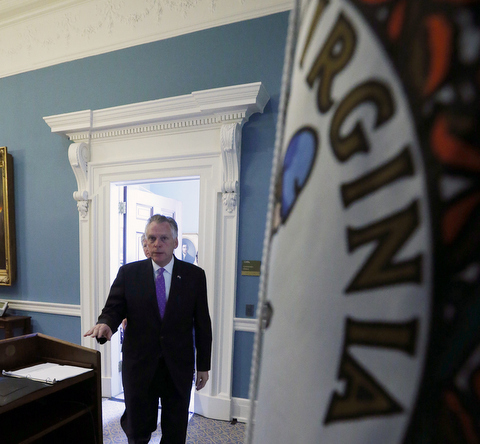
Virginia Gov. Terry McAuliffe arrives to a news conference. (Bob Brown/Richmond Times-Dispatch via AP)
McAuliffe dismissed claims that he overstepped his constitutional authority, insisting instead that his efforts were to aid formerly disenfranchised Americans.
“Well, I would tell the Republicans ‘quit complaining and go out and earn these folks’ right to vote for you. Go out and talk to them,’” McAuliffe told “Meet the Press” on Sunday’s edition. “I think some of the language that has come out of the Republicans, I would tell them to be very careful at how they frame this, very careful of their rhetoric. Republicans have an opportunity to go out and get these individual new voters to vote for them. But make your argument.”
Towana Felix, director of Each One, Reach One, a resource center for returning citizens, said she is less concerned about McAuliffe’s motives than the action he actually took to re-engage the formerly incarcerated.
“Nowhere in the Constitution does it state that a person is no longer a citizen because he has committed a crime. It epitomized disenfranchisement to strip a citizen of his right to vote – one of the fundamental rights he has – due to his behavior,” Felix told the AFRO. “Once that person has served their sentence, they should be welcomed back into society with full benefits.”
According to the Sentencing Project and Human Rights Watch, one out of every 13 Black people is prohibited from casting a ballot in the United States, having lost their right to vote because of felony convictions. Depending on the laws in their states, some may regain access to the polls when they complete their prison sentences, finish parole, or complete probation, but those in Kentucky, Florida and Iowa will be disenfranchised for the rest of their lives. (Only two states — Maine and Vermont — allow those currently in prison on felony charges to vote, and eight states even ban inmates with misdemeanors.)
The state of Maryland and the District of Columbia, both restore voting rights immediately after release from prison. As of March, more than 44,000 of Maryland returning citizens —20,000 in Baltimore alone—became eligible to register before the April primaries. There are 12 states that restrict voting rights even after a person has served his or her prison sentence and is no longer on probation or parole; such individuals in those states make up approximately 45 percent of the entire disenfranchised population. Virginia is currently considered as one of those states.
McAuliffe said that restorative actions such as returning the vote to a large segment of Virginia’s population encouraged the returning citizen to move proudly back into sovereignty without a mark of previous wrongdoing weighing them down.
“Second chances matter,” he said. “They served their time, they’re in our communities—why not let them vote? I don’t understand. I’m not giving you gun rights back. I’m not reducing your sentence. I’m merely saying after you have served your time, and your probation or parole are all over, determined by a judge and jury, I want you feeling good about yourself. I want you voting.”
