


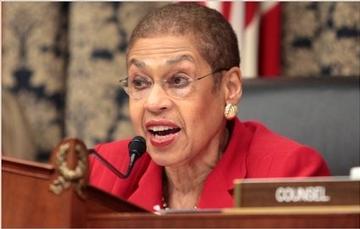
D.C. Del. Eleanor Holmes Norton firmly supports D.C. budget autonomy. (AP Photo/Charles Dharapak)
On March 18, D.C. Superior Court Judge Brian Holeman ruled that D.C.’s mayor and council have the right to control how locally-generated dollars are spent, not the U.S. Congress. The decision was based on a budget autonomy referendum passed by District voters in 2013, mandating the District approve its own budget without the approval of Congress.
The Home Rule Charter, the District’s governing document signed into law by President Nixon in 1973, stated that when the mayor and the D.C. Council approve the city’s budget, it must be submitted for approval to the President of the United States and the U.S. Congress. Holeman’s ruling changed that procedure. D.C. Vote Executive Director Kimberly Perry told the AFRO that the District’s elected leaders budget process has permanently changed.
“Judge Holeman’s ruling is the law of the land,” Perry said. “The ruling supports the mayor and the council chairman in that they have the right to work on the city’s budget without the interference of Congress.”
Perry said with the new process the council and mayor approve a budget, but instead of submitting it to the president and Congress for approval, it is sent to Congress for a 30-day review, following the process for legislation passed by the D.C. Council. If there are no congressional concerns during the review period, Perry said, the budget becomes operational.
The decision is a “historic step in the District’s quest for autonomy, and is a seminal day in the history of Home Rule,” D.C. Council Chairman Phil Mendelson (D) said.
There were some blips along the way to budget autonomy. When the referendum was approved in 2013, then D.C. Mayor Vincent Gray (D), D.C. Del. Eleanor Holmes Norton (D), D.C. Attorney General Irv Nathan, and District’s Chief Financial Officer Jeffrey S. DeWitt didn’t support it because it violated the constitutionally mandated Congressional authority over the city.
When Bowser became mayor in 2015, she supported the referendum and worked with the council to move the budget autonomy legalization process forward. In her “State of the District Address” March 22 at Arena Stage, Bowser said, “ was glad last year to break from my predecessor and stand on the side of those who are standing up for the voters. Unlike the previous administration, I believe that when 83 percent of D.C. voters cast a ballot in favor of budget autonomy, the mayor ought to back them up.”
D.C. Attorney General Karl Racine (D), after reviewing Holeman’s decision, decided not to appeal it. “Throughout this litigation, all interested parties – the mayor, the council, the chief financial officer and the office of the Attorney General – have shared the ultimate goal of gaining budget autonomy for the District but disagreed on the legal means of achieving that goal,” Racine said. “The Superior Court of the District of Columbia has now ruled that the Budget Autonomy Act is legal. Given the chief financial officer’s decision not to appeal, the office of the Attorney General will not seek appellate review of the Superior Court’s decision in this case.”
Norton praised Holeman’s March 18 decision in a short statement and pledged to fight any attempt by Congress to undermine it. On April 1, the delegate had a fight on her hands.
On March 31, the Republican-led U.S. House filed an amicus brief in federal court, with the support of a conservative legal group Judicial Watch, to declare the referendum invalid. Norton praised House Minority Leader Nancy Pelosi (D-Calif.) and House Minority Whip Steny Hoyer (D-Md.), members of the Bipartisan Legal Advisory Group with Republican leaders, for declining to participate in the amicus brief and chastised her GOP colleagues for getting involved in District affairs. “Here they go again,” Norton said. “I will continue to defend D.C. budget autonomy from congressional interference.”