

Local opponents of a plan to expand the Virginia Avenue Tunnel in Southeast Washington, D.C., are taking courage from the derailment of another CSX Transportation project in Baltimore.
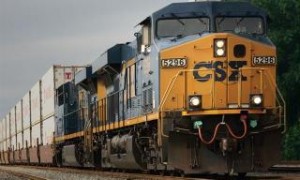
On Aug. 28, Maryland Transportation Secretary James T. Smith Jr. announced that plans for a CSX rail cargo facility in West Baltimore had been squashed, and the state’s promised $30 million-plus investment was being withdrawn. The announcement came two days after the D.C. Council held a hearing on the proposed VAT project.
The Maryland Department of Transportation had been working with CSX since 2009 to develop the facility at Port of Baltimore’s Seagirt Marine Terminal, with an eye to increasing the volume of international containers coming to the port due to an expanding Panama Canal. The facility, like the D.C. tunnel project, would also be built to accommodate trains carrying double-stacked containers along CSX’s Eastern Seaboard freight rail corridor.
In a statement, Smith said it was “disappointing” that five years of work had come to naught. But, he said, fierce grassroots-based opposition corroded political will. “It just wasn’t getting the kind of traction in the community it needed,” the secretary told The Baltimore Sun. “The political will of elected officials usually doesn’t collapse of its own initiative, it usually collapses because the community revolts and says it just doesn’t want it. And we were in that position.”
Since the plan was made public, residents and local officials expressed concern with the potential disruption of trucks going back and forth into the 24-hour facility, among other concerns. And, it seems, CSX was not able to adequately address their apprehension.
“I made clear from the start, I wanted a project that was compatible with the neighboring community,” said Baltimore City Mayor Stephanie Rawlings-Blake in a statement. “While I support the continued strength of industry at the Port, it can’t be at the expense of our residents and local businesses.”
Similarly, DCSafeRail, a coalition of D.C. residents, have expressed concerns with some of the potential impacts—environmental hazards, traffic congestion, diverted foot traffic from nearby businesses—of CSX’s plan to rehab the more-than-century-old Virginia Avenue Tunnel. The company has argued that the 3,800-foot throughway, which contains a single railroad track with west and east portals near 2nd Street SE and 11th Street SE, respectively, causes a bottleneck. And they want to rebuild the tunnel to fit two tracks and make it at least 21 feet high to accommodate double-stacked intermodal freight trains.
In a letter to D.C. Council members, DCSafeRail member Maureen Cohen Harrington pointed out the similarities between the Baltimore and D.C. cases and argued that the Maryland decision effectively nullifies CSX’s justification for retrofitting the VAT.
“Baltimore and Maryland stood to gain tremendously from CSX’s proposal – both in terms of permanent jobs in the port as well as additional tax revenues. Despite those benefits, Maryland officials determined that the human cost was still too high,” Harrington said in the Sept. 5 letter. “Here in DC the analysis is much easier. There is no benefit to the District by expanding the tunnel, and the costs to District residents are significant.”

