


Where should a police body camera be worn? How will the data be stored and who will have access to it? How many cameras will a department need beyond the number officers will wear in the field, in case of damaged equipment? Who’s going to pay for all this?
The first meeting of the state’s workgroup on the implementation and use of body-worn cameras for police raised many considerations that will have to be parsed before the state can move forward with the program.
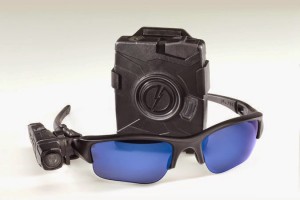
Among the basic issues is where officers will wear the cameras. Cameras worn on the body can be obstructed when, for example, an officer extends his arms while aiming his firearm, or while ducking for cover. Police in Laurel, Md., the only police department that has implemented a body camera program to date, use a system mounted on eyeglasses or a headband. Carlos Acosta, the inspector general of the Prince George’s County Police Department and a member of the state’s workgroup, noted that his department has been using a similar system in their training academy in anticipation of implementing a pilot program on the streets, and that most recruits disliked the eyeglass-mounted cameras.
Karen Kruger, executive director of the Maryland Sheriff’s Association, also pointed out that such cameras generally only work when mounted on Oakley style sunglasses, which tend to be expensive.
David Rocah, a senior staff attorney with the ACLU of Maryland, said it is important that cameras be able to capture the minutes prior to an officer pressing record, similar to how police dashboard cameras function. This function, however, quickly runs into technical limitations.
Acosta pointed out that dashboard cameras are powered by a patrol vehicle’s alternator, but a body camera would be limited to the battery it has installed, and any system that was always recording in order to be able to capture a buffer period prior to an officer pressing record would run through batteries at a high clip. Such a system would thus require an officer to carry extra battery packs which add weight and can impede movement, something Chief John Fitzgerald of the Chevy Chase Village Police Department said he would object to.
Having extra batteries would also increase costs, as they would have to be purchased in addition to enough cameras for all officers in the field as well as extras in the event of equipment failure (since they would be required to be worn, departments would need extras on hand at all times), and that is before even thinking about the costs of storage, maintenance, and officer training, among other things.
The first meeting of the state’s workgroup was largely focused on laying out the relevant considerations that the group will have to tackle. The group will meet next on Nov. 12, and has been tasked with presenting a report to the chairpersons of the Senate Judicial Proceedings Committee and the House Judiciary Committee of the Maryland General Assembly by Dec. 1.
ralejandro@afro.com