

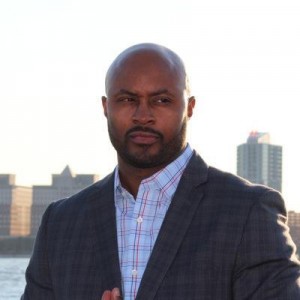
Ramel Smith — “Blaquesmith”– began pushing for holistic, cognitive behavioral approaches to reach the youth in 2007.
Whether faced with fears of being harmed, post-traumatic stress from witnessing violence, or being unduly cast as the nation’s boogeymen, young Black males have had few mental health professionals advocating for their behavioral and emotional well-being. That is, until Ramel Smith, a psychologist, who goes by the name “Blaquesmith” began pushing for holistic, cognitive behavioral approaches in 2007.
Designed to enrich the mind, strengthen the body, and edify the wounds of the soul, Smith’s platform seeks to intervene as early as possible in the lives of young people to ensure they form a positive view of themselves.
“The human brain is 90 percent developed by the age of five with the early experiences on the infant brain forming lasting lifetime effects,” Smith said in an interview with the AFRO. “If something is not purposely done to help reverse the past pain, those situations can haunt a young person for a lifetime,” said Smith, citing research conducted on Adverse Childhood Experiences (ACE). “Even African Americans who have been educationally and financially successful still show the scars of living in a society with such racial hegemonic ideologies.”
But as parents increasingly grapple with social stigmas that negatively label their children – many of which take root in schools and develop through the school to prison pipeline – fewer tools seem available for positive reinforcement. However, that is not true, according to Smith, who serves as the sports psychologist for the NBA Milwaukee Bucks.
“Parents must teach their children self-love, a history of their true origins, and try to help them avoid the traps that are set to increase the probability for failure,” said Smith, who despite being an honor student, was placed in remedial mathematics and reading classes as a child. “Our current school system and a lot of our psychological interventions are outdated and oftentimes are implemented by individuals who have difficulty relating to the situation that many of their clients face. The school to prison pipeline is real and the feeder for the Prison Industrial Complex; therefore, the more young men falsely identified with educational or emotional difficulties, the more they are removed from the educational system and into a sense of survival that includes being unemployed or underemployed.”
Smith’s theoretical orientation refocuses the attentions of those harmed by life away from self-harm and revenge to ways of helping others. His latest book, “Building a Better Man” offers a practical examination of manhood and the loss of rites of passage, now replaced with violence and misogyny.
“The question is how to live in the now and not the past. How do we become an agent of change in an environment that only understands violence? We go back to the philosophy of love. We introduce love where there was hate. We introduce peace and forgiveness where there was chaos and vengefulness,” he said. “Young people have a beautiful ignorance and sense of invincibility that needs to be used and just channeled in the right direction.”
