

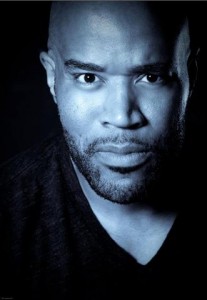
Sean Yoes
Somewhere in heaven I suspect two great Baltimoreans and American icons of justice, Thurgood Marshall and Parren Mitchell, are looking down on us and smiling broadly.
The reason for their glee is University of Maryland President Wallace Loh’s (the first non-White president in the school’s history) announced push this week to remove the name of former president (1935-1954) Henry C. “Curley” Byrd, perhaps the most influential leader in the school’s history, from the University of Maryland’s stadium (Byrd Stadium) the home of Maryland Terrapin football since 1950.
This is part of Loh’s campus-wide email sent December 7:
“He was an ardent proponent of “separate but equal” education, both as president and later in his campaign for governor of Maryland. At this time of intensified racial tension in the nation, “Byrd Stadium” stands as a symbol to many African-American alumni and students. It is a painful reminder that a generation ago they were unwelcome on this campus.”
Both Marshall and Mitchell fought mightily to break Byrd’s segregationist grip on the University of Maryland.
In 1935, when Byrd was acting president of UM, Marshall (who had passed the Bar just two years earlier) led the legal team that desegregated the University of Maryland at Baltimore School of Law, with the admission of Donald Gaines Murray in September of that year. A Baltimore City Court ruled in June of 1935 that Murray had to be admitted to the school and from July to September of 1935, Byrd engaged in a series of panicked communications with UM’s registrar Willard M. Hillegeist as Marshall marched Murray to the school’s front door.
It was the nation’s first school desegregation victory on the higher education level.
In a letter dated, July 15, 1935, Byrd scrawled a handwritten postscript at the bottom of the page that said, “Hille: Don’t register any negro students until I talk with you.”
After Byrd lost the battle in Baltimore, he began a nearly two-decade campaign to keep College Park White. In a letter dated March 19, 1937, Marshall wrote Byrd directly confronting him about his clandestine political attempt to bar Blacks from Byrd’s beloved College Park campus.
It wasn’t until August of 1950 when Mitchell, a recipient of the Purple Heart in World War II and graduate of Morgan State College, entered the University of Maryland College Park for his Master’s degree in Sociology. He would later become the first Black Congressman to represent Maryland.
“I had no direct contact with him, but all that I heard was that he was a terrible person, a bigot of the first order, no sympathy no kindness in his heart,” Mitchell told me in an interview in 2004.
During that interview, Mitchell also revealed the sense of profound isolation he experienced at College Park.
“From the entrance of the campus to the back of the cafeteria it was a long walk,” Mitchell said. “The cafeteria was a huge place and every table I passed just went quiet. It was just very lonely.”
Mitchell’s experience is the embodiment of Loh’s observation about so many Black students who have been alienated at the school for generations.
At least Loh recognizes this history and its impact on the school’s present. Taking Byrd’s name off of UM’s stadium is a nice symbolic gesture to his full biography and an acknowledgement of the legions of Black students who were forced to endure the ferment of his racist ideology.
Sean Yoes is a senior contributor to the AFRO and host and executive producer of, “First Edition,” which airs Monday through Friday, 5-7 p.m on WEAA 88.9.
