


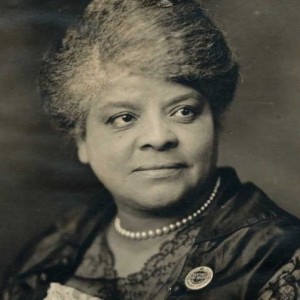
Ida B. Wells-Barnett (Screenshot from YouTube video by biography.com video)
Everyone who had a question and went to Google to seek the answer on July 16th was treated to a Doodle that honored what would have been the 153rd birthday of Ida B. Wells-Barnett.
“We salute Ida B. Wells with a Doodle that commemorates her journalistic mettle and her unequivocal commitment to the advancement of civil liberties,” Google wrote.
While not as well known as some of her contemporaries, Wells-Barnett was a pioneer ahead of her time. She was a teacher, a journalist, a suffragist, and one of the leading activists at the birth of the civil rights movement. She is remembered for her tireless fight against lynching in the South and being a founder of the NAACP. In “REMINISCENCES: CHAPTER 11. The N.A.A.C.P. Begins,” written by Mary White Ovington in 1932 and published in The AFRO, Ovington wrote about the 1st conference to form what would become the NAACP . Of Well-Barnett, she wrote, “Ida Wells-Barnett’s name was omitted in the committee’s list, brought before the conference. But she got it put on in the next few days. And there it stands, where it ought to be.”
Ida B. Wells-Barnett was born into slavery in Holly Springs, Mississippi, in 1862, and was the eighth of twelve children. Both of her parents were slaves, her mother a cook and her father a carpenter, until freed by President Lincoln’s Emancipation Proclamation. They would both die by the time she was 16 years-old due to a Yellow Fever outbreak.
Growing up in the South and witnessing the mistreatment of Blacks she felt as though education would be the key to a better life for her and her family. To that end she attended Rust College, an HBCU in Mississippi, started by the Freedmen’s Aid Society, for newly freed slaves. After studying there and at Fisk University, she went on to become a teacher in Memphis.
In 1884, seventy one years before Rosa Parks refused to give up her seat on a bus in Montgomery, Alabama, Ida B. Wells-Barnett was asked by a conductor of the Chesapeake & Ohio Railroad Company in Memphis to give up her seat to a White man and she refused. In her autobiography, Crusade for Justice, she describes the event
“I refused, saying that the forward car was a smoker, and as I was in the ladies’ car, I proposed to stay. . . tried to drag me out of the seat, but the moment he caught hold of my arm I fastened my teeth in the back of his hand. I had braced my feet against the seat in front and was holding to the back, and as he had already been badly bitten he didn’t try it again by himself. He went forward and got the baggageman and another man to help him and of course they succeeded in dragging me out.”
She filed a successful lawsuit against the railroad company that would later be overturned by The Tennessee Supreme Court.
This incident would be the match that lit her writing career. As a teacher she was very critical of racism within the school system which she claimed contributed to the underprivileged conditions in Memphis’ Back schools. This would ultimately get her fired from her position as a teacher and lead to her writing full time. She tackled civil rights issues and race issues and was published in numerous Black publications before becoming editor and co-owner of the Memphis Free Speech and Headlight. She once wrote Whites used lynching “to get rid of Negroes who were acquiring wealth and property, and thus keep the race terrorized.”
In “A History Series: Ida B. Wells Anti-Lynching Crusader” Dr. Edgar A. Toppin cites Wells-Barnett as “the first to compile and publish statistics on lynching…”. In 1909 she delivered those statistics to a conference on the status of the American Negro held in New York and according to “Crusader Tells Story of Crime” she said “No other nation, civilized or savage, burns it’s criminals. Only under the stars and stripes is the human holocaust possible.” Among her other publications documenting the South’s long sordid history with lynching and abusing Blacks are “Southern Horrors” (1892) and “A Red Record” (1894).
Wells-Barnett had many critics, including, at one point, The AFRO. In an article entitled, “A Chronic Fault Finder,” an AFRO writer castigated her for under estimating the number of Blacks in Baltimore at the time, denied that Baltimore Blacks were treated poorly in White owned stores and noted that some Blacks did own grocery stores contrary to Wells-Barnett’s reporting.
jbentley@afro.com