

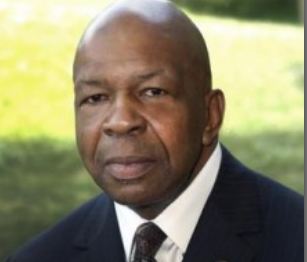
Elijah Cummings
National Minority Health Month each April is a time when we are called to reflect upon the health of Americans of Color. This year, a truthful assessment of our progress would be mixed.
More African Americans have access to health insurance than ever before. Yet, being Black in America continues to be a mortality factor in the health statistics.
Late last month, the White House released the latest progress report on the very real accomplishments of the Affordable Care Act. Thanks largely to the ACA, an estimated 20 million Americans have gained health insurance — and since 2013, the number of African Americans without health insurance has declined by more than one half.
All of us, moreover, have gained very real protection against being denied coverage for pre-existing health conditions, annual and lifetime limits on coverage, and excessive demands for out-of-pocket expenditures.
When combined with other positive health initiatives (like Medicaid expansion, children’s dental benefits and greater support for Federally Qualified Health Centers), expanded access to health insurance has the potential to substantially reduce the health disparities that have long plagued our communities.
Yet, it is painfully clear that we have not yet achieved racial health equity in this country.
Years after former Surgeon General David Satcher concluded that more than 886,000 premature deaths could have been prevented during the 1990s if African Americans had received the same health care as Caucasians – and despite our expanded right to affordable healthcare under the ACA – being Black in America continues to be a significant factor in our mortality statistics.
Cancer, heart disease, diabetes, and stroke, along with other deadly diseases, continue to disproportionately afflict our community.
Expanding access to health insurance was a major step forward. Yet, clearly, more urgent actions are needed.
As our Congressional Black Caucus Chairman, G. K. Butterfield, and CBC Health Braintrust Chairwoman Robin Kelly have observed, if we are to eliminate racially-based health disparities, we must overcome the “inequities in the environmental, social, and economic conditions in our communities.”
They are speaking to what academics would term “structural racism,” the totality of the barriers that communities of color must confront and overcome — simply because of our race.
Consider these facts.
In 2011, the Baltimore City Health Department released comparative mortality statistics for two Baltimore neighborhoods, predominantly African American Upton/Druid Heights and predominantly Caucasian Roland Park.
In Roland Park (where the average annual income was more than $90,000), the life expectancy was 83. However, in Upton/Druid Park (with an average annual income of less than $14,000), the life expectancy was 20 years less. More likely to be both Black and poor, those Baltimoreans were 3 times more likely to die of heart disease and 8 times more likely to die of diabetes.
More recently, in February of this year, we learned more about the obstacles to obtaining healthcare faced by Baltimore’s least affluent residents through some world-class reporting done by University of Maryland journalism students in cooperation with the Kaiser Health News.
Focusing upon the practical difficulties that the poor, mostly Black residents of Sandtown Winchester continue to face in obtaining the healthcare that they need, the reporters sought answers to some life-or-death questions that must concern us all.
In a city with some of the finest health institutions in the world, how could there be such enormous disparities in health outcomes? Why are low-income families in Baltimore suffering far worse medical outcomes with respect to heart disease, diabetes, obesity and hypertension than are families that live in neighborhoods a few miles away?
Why hasn’t the fact that far more Baltimoreans now qualify for Medicaid because of expanded health insurance coverage under the Affordable Care Act made a more pronounced difference?
The challenge for all of us goes beyond politics or academic discussions about the interaction of socio-economic class and race in our society.
Poverty, bureaucracy and the complexities of our health care system create barriers that are difficult for low-income families to surmount.
The undeniable consequences of these barriers are that people in our community are suffering, and even dying, when they could be saved by the world-class healthcare that is every American’s right.
We must act with a heightened sense of urgency to extend life-preserving health care to neighbors who may lack a telephone, the Internet, dependable transportation or even a credit card.
We must expand the outreach of Federally Qualified Health Centers and other “medical homes” located in the neighborhoods of people most in need.
We must provide more help to those who have difficulty with the process of applying for insurance coverage; and encourage more health care providers to accept Medicaid.
We must work even harder to expand access to healthier food and redouble our efforts to eliminate environmental hazards like lead.
Clearly, our government has an urgent leadership role to play in achieving a healthier community, but so do all of us. We each have the power, working through our churches, schools, and social groups, to connect our neighbors to the care that can save lives.
This is our choice – and both the health of our city and our shared sense of humanity are at stake.
Congressman Elijah Cummings represents Maryland’s 7th Congressional District in the United States House of Representatives.
